Lab 05
Prototype Workshop
From CAD model to water-ready board — built, fitted, and proven
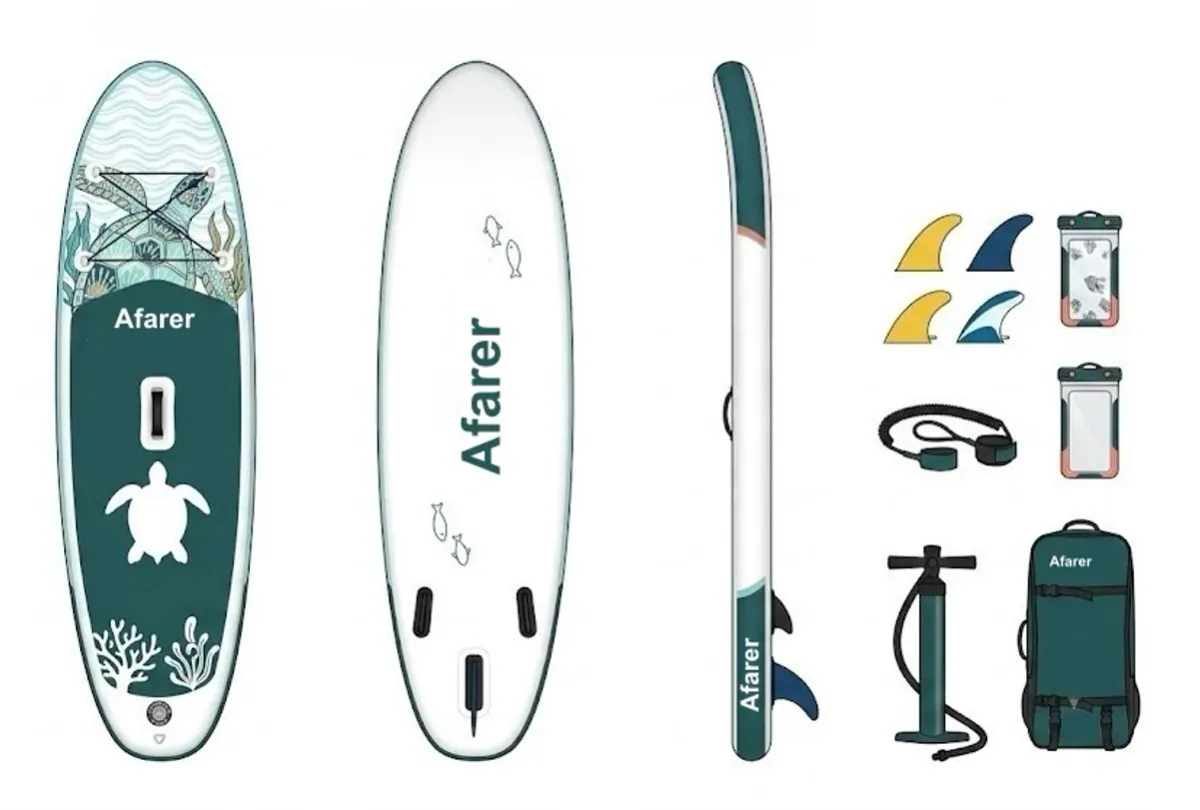
A CAD model, no matter how detailed, cannot reveal how a board will actually handle until it meets the water. That is why our Prototype Workshop is designed to translate engineering data into a physical, water-ready board as quickly and accurately as possible. Every new Afarer model — and every significant custom build — passes through this workshop before the production tooling is committed.
Where design becomes reality
The workshop is fully equipped for simultaneous fabrication of hull, rails, and rigging. This parallel-workflow approach cuts prototype lead time to 8-12 weeks from engineering release, compared to the industry norm of 16-20 weeks. When your application demands a specialised solution, we can move from concept to on-water validation in under three months.
Workshop capabilities
| Workstation | Equipment | Purpose |
|---|---|---|
| Hull fabrication | CNC fabric cutter, heat-lamination press, drop-stitch core preparation station | Full-scale hull production in all three construction types |
| Rail & chamber assembly | RF welding press, hot-air tacking station, inflation test jig | Fabrication of full-size rail and chamber assemblies with all baffles and valves |
| Rigging & fitting | Fin-box routing jig, cargo-mount and handle welding fixtures, deck-pad cutting station | Complete outfitting: fins, cargo mounts, leash plugs, handles, deck pads, valves |
| Instrumentation bay | GPS speed sensor, pressure transducers, accelerometers, thermocouple array, data-logger | Sea-trial instrumentation installation and calibration |
The prototype journey — step by step
- Engineering handover — The design package (3D model, FEA report, bill of materials, layup schedule) is formally reviewed by the workshop lead and the project engineer. Any manufacturing concerns are flagged and resolved before cutting begins.
- Hull production — The hull is built according to the engineering specification. For single-layer construction: the drop-stitch core is laminated with the specified PVC skin. For double-layer construction: the additional skin is applied over the base laminate before the pattern is cut. For fused construction: the lamination parameters are loaded from the approved process sheet and verified on a first-off coupon.
- Rail fabrication — Fabric is cut using CNC-pattern templates, then RF-welded into full-size rails and chambers. Each chamber is inflated to test pressure and left for 24 h for initial stabilisation.
- Assembly & rigging — Hull and rails are mated. Fin boxes and cargo mounts are fitted, leash plugs and carry handles are installed, the inflation valve is torqued in, and the deck pad is applied and aligned.
- Static tests — Before the board touches water, it undergoes: buoyancy check (full load + 30 % reserve), chamber pressure-hold test, valve leak-down test, handle and mount pull-test.
- Sea trial programme — 20 hours of in-water testing, detailed below.
- Prototype review — A formal sign-off meeting is held with engineering, production, and quality teams. Any required design changes are documented and incorporated into the production release.
20-Hour Sea Trial Programme — Test Schedule
Custom prototyping for unique applications
The Prototype Workshop is where we solve the problems that standard production boards cannot address. Recent examples include:
- A high-visibility rescue SUP for a search-and-rescue organisation, requiring integrated grab handles, gear mounts for rescue equipment, and a high-buoyancy hull for casualty recovery — all prototyped, fitted, and tested at our facility.
- An expedition touring SUP for a hydrographic survey contractor, with a removable instrument mast, sealed gear ports, and a low-profile transducer mount designed to minimise drag.
- A compact fishing SUP for a resort fleet, where the prototype was used to validate stability, gear rigging, and durability under daily rental use before the client committed to a fleet of four.
Our prototyping team
The workshop is staffed by eight multi-skilled marine technicians, each cross-trained in at least two of the three core disciplines (hull, rail, rigging). The team lead is a master fabricator with 16 years of experience spanning custom one-off builds to production series. Every prototype is assigned a dedicated project engineer who serves as the single point of contact for the client throughout the build and trial process.
Client involvement
We actively encourage our clients to attend key milestones during the prototype build — particularly the initial fit-out review and the sea trial. Your operational feedback during these stages is invaluable in fine-tuning the board before it enters production. We do not build in a vacuum; we build in partnership with you.
The 20-hour sea trial is also an opportunity for your team to familiarise themselves with the board's handling, deck layout, and maintenance requirements, ensuring a smooth transition to service when the production boards are delivered.
Start your prototype project
Tell us about the board you need and we will propose a prototype development plan.
Contact our prototyping team